

Why Shampoo Bars Are Better for Hair Growth: The Science Behind Gentle Cleansing

The Scalp is Skin. Treat It That Way.
Hair growth begins at the follicle, which lives inside your scalp. A follicle that’s clogged, inflamed, or stripped of its natural moisture balance struggles to produce strong, healthy strands. This is where the ingredients in your shampoo matter far more than most people think.
Sodium Lauryl Sulfate (SLS)—the foaming agent found in the majority of commercial shampoos—is a petroleum-derived detergent designed to strip oil aggressively. It’s effective at cleaning, but it doesn’t distinguish between the buildup you want removed and the natural sebum your scalp produces to protect itself. When that protective layer is repeatedly stripped away, your scalp overcompensates by producing more oil, triggering a cycle that can lead to irritation, dryness, and a compromised environment for hair growth.
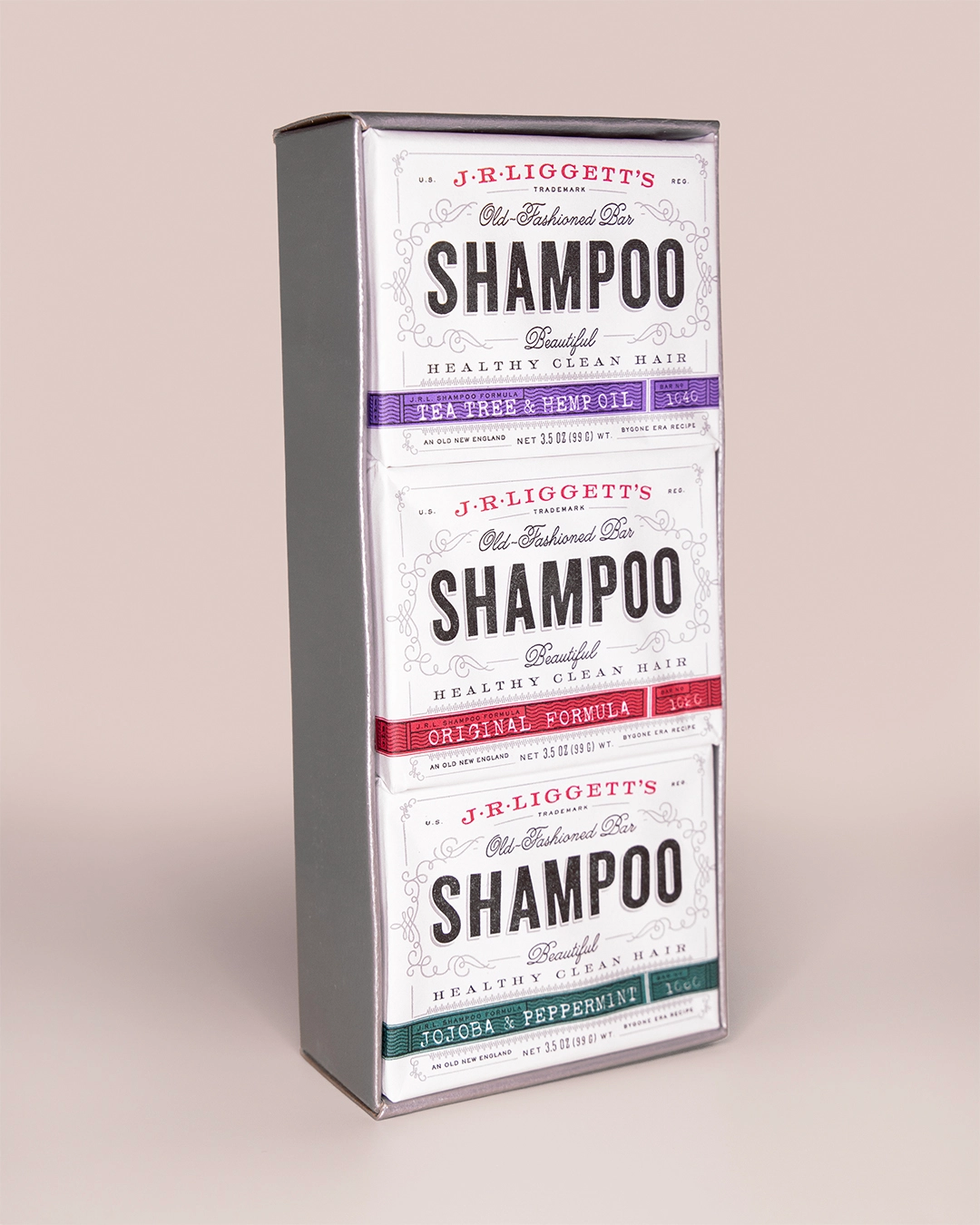
J.R.LIGGETT’S bars contain no SLS, no DEA, no synthetic detergents of any kind. Every bar is built on a foundation of saponified vegetable oils—olive, coconut, and castor—which clean gently by binding to dirt and excess oil without disturbing the scalp’s natural balance.
What “Detergent-Free” Actually Means for Your Hair
When we say our bars are detergent-free, we mean the cleansing mechanism is fundamentally different from most liquid shampoos. Saponified oils—that is, natural oils that have undergone the saponification process—produce a mild, skin-compatible lather rather than the aggressive foam created by synthetic surfactants.
The practical difference looks like this:
- Hair is cleaned without being stripped of its natural oils
- The scalp’s pH balance is less disrupted after each wash
- Most users find they need to wash less frequently over time, as oil production normalizes
- Many users find they don’t need a conditioner at all—because the hair shaft isn’t being roughed up by harsh detergents in the first place
This is why the formula discovered on that old handwritten recipe card in a New Hampshire farmhouse has endured for over four decades. It wasn’t designed around trends. It was designed around how hair and skin actually work.
The Ingredients Doing the Work
Understanding what’s in your shampoo is the first step to understanding why it performs the way it does. Here’s a closer look at the oils that form the foundation of every J.R.LIGGETT’S bar and what they contribute to scalp and hair health.
Saponified Olive Oil: The Backbone
Olive oil has been used for hair and skin care for thousands of years, and for good reason. It penetrates the hair shaft rather than simply coating it, which means it strengthens from within rather than masking damage. Its vitamin E content provides antioxidant protection for the scalp, and its anti-inflammatory properties can help soothe conditions that interfere with healthy follicle function.
Coconut Oil: Strength and Protection
Research has demonstrated that coconut oil is one of the few oils capable of reducing protein loss in hair. It penetrates the hair shaft and creates a protective barrier against environmental damage—which is particularly meaningful for those with color-treated, processed, or heat-styled hair. Its natural antimicrobial properties also help maintain a healthy scalp environment.
Castor Oil: The Circulation Supporter
Rich in ricinoleic acid, castor oil supports scalp circulation and has long been associated with promoting a healthy environment for hair growth. It also thickens and adds volume to the hair strand itself, which is one reason our bars tend to leave hair looking fuller over time rather than flatter.
Jojoba Oil: The Scalp Balancer
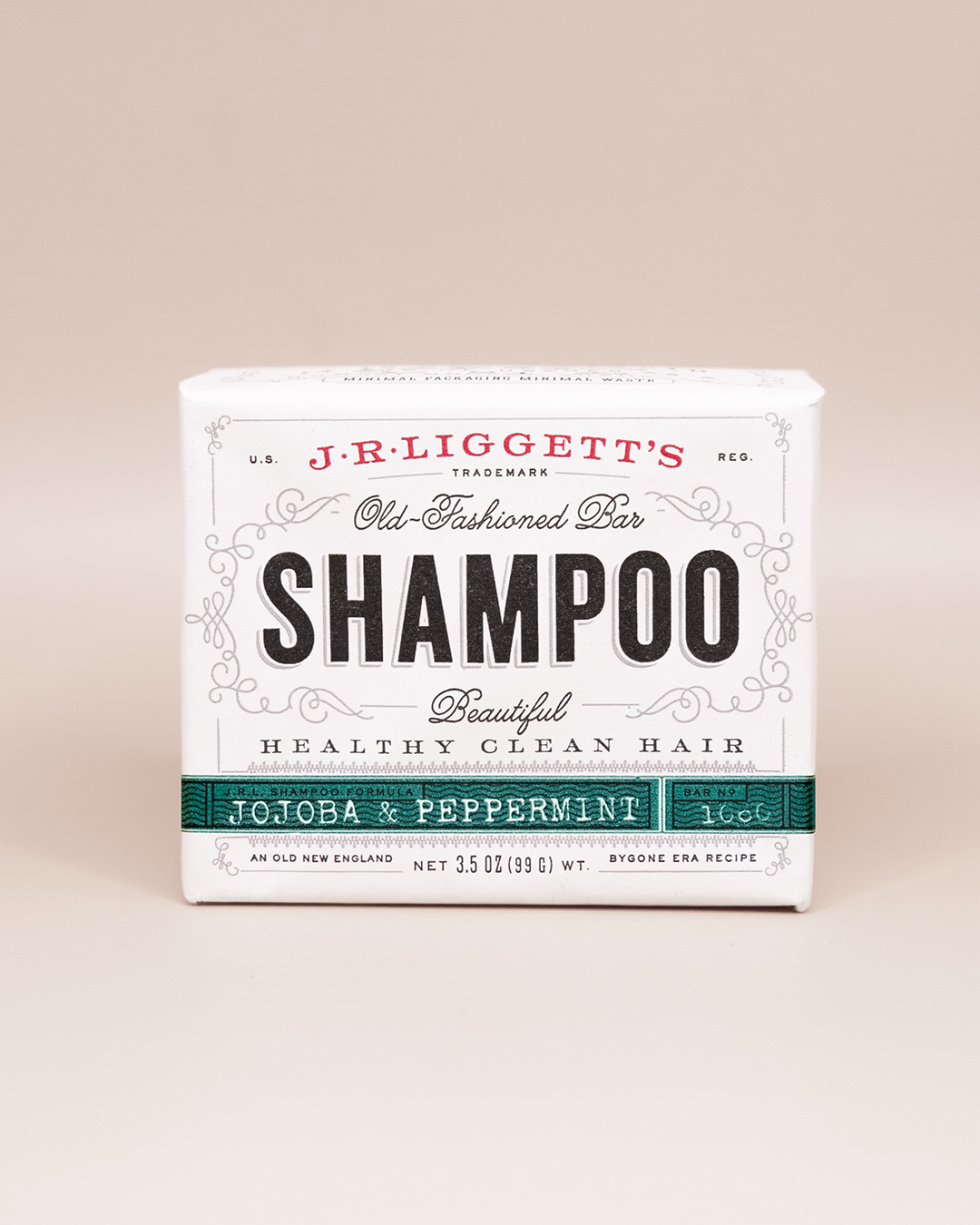
Jojoba is chemically similar to the sebum your scalp produces naturally, which makes it uniquely effective at restoring balance without tipping it in either direction. For oily scalps, it signals that the skin is already moisturized, helping to normalize oil production. For dry scalps, it provides lasting moisture without a greasy residue. It also dissolves sebum buildup that can clog follicles—one of the more common (and overlooked) contributors to slowed hair growth.
Why Most People Don’t Need a Conditioner With Our Bars
This is the part that surprises most new customers—and the reason so many of them become long-term loyalists.
Conditioner exists, in large part, to repair the damage that harsh detergents cause. SLS-based shampoos lift the outer cuticle of the hair shaft aggressively. Conditioner then tries to smooth it back down. With a detergent-free, oil-based shampoo bar, the cuticle is never roughed up in the first place—which means the hair comes out of the shower already smooth, already manageable, already with its natural moisture intact.
That said, everyone’s hair is different. For those with particularly dry, curly, color-treated, or chemically processed hair, our Conditioner Bar—formulated with plant-derived ingredients and free from silicones—works beautifully as a complement. But it’s a genuine option, not a requirement built into the system.
The Transition Period: What to Expect
It would be incomplete to talk about switching to a shampoo bar without mentioning the adjustment period—because it’s real, and understanding it upfront makes all the difference.
After years of synthetic detergents, the scalp is often in a cycle of overproduction. It’s been stripped, so it keeps producing oil to compensate. When you switch to a gentler cleanser, that cycle needs time to recalibrate. For some people, this happens in a week or two. For others, it takes a month. Hair may feel different during this period—sometimes oilier at the roots, sometimes slightly waxy.
This is not the bar failing. It’s your scalp recalibrating. Once it does, most customers report healthier-looking hair, more scalp comfort, and a reduced need to wash as frequently. The patience it takes to get there is worth the result.
Simplicity Has Always Been the Point
In 1982, when J.R. Liggett started making shampoo bars on his family’s New Hampshire farm, the personal care industry was moving in the opposite direction—more synthetic ingredients, more plastic packaging, more chemicals with more syllables. What he was making was considered an artifact of the past.
It turns out the past had it right.
Clean, plant-based ingredients. No petroleum. No plastic. Made by hand in small batches, powered by solar energy, with a formula that works because it respects the biology of your hair and scalp rather than overriding it.
Forty-three years later, we’re still making it the same way. And the customers who’ve stayed with us all those years—many of them now buying for their own children and grandchildren—are the best evidence we know for what consistent, simple, honest ingredients can do.