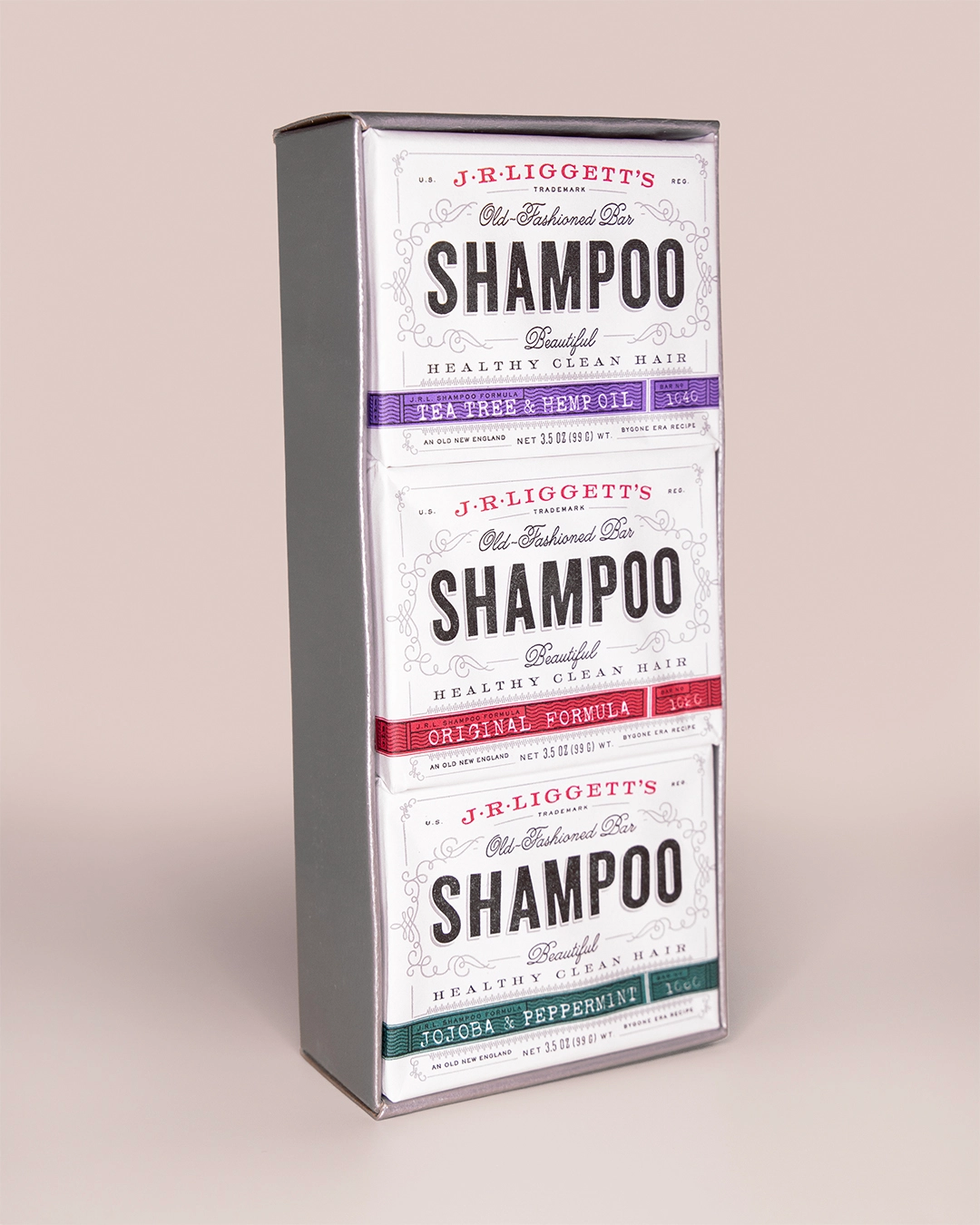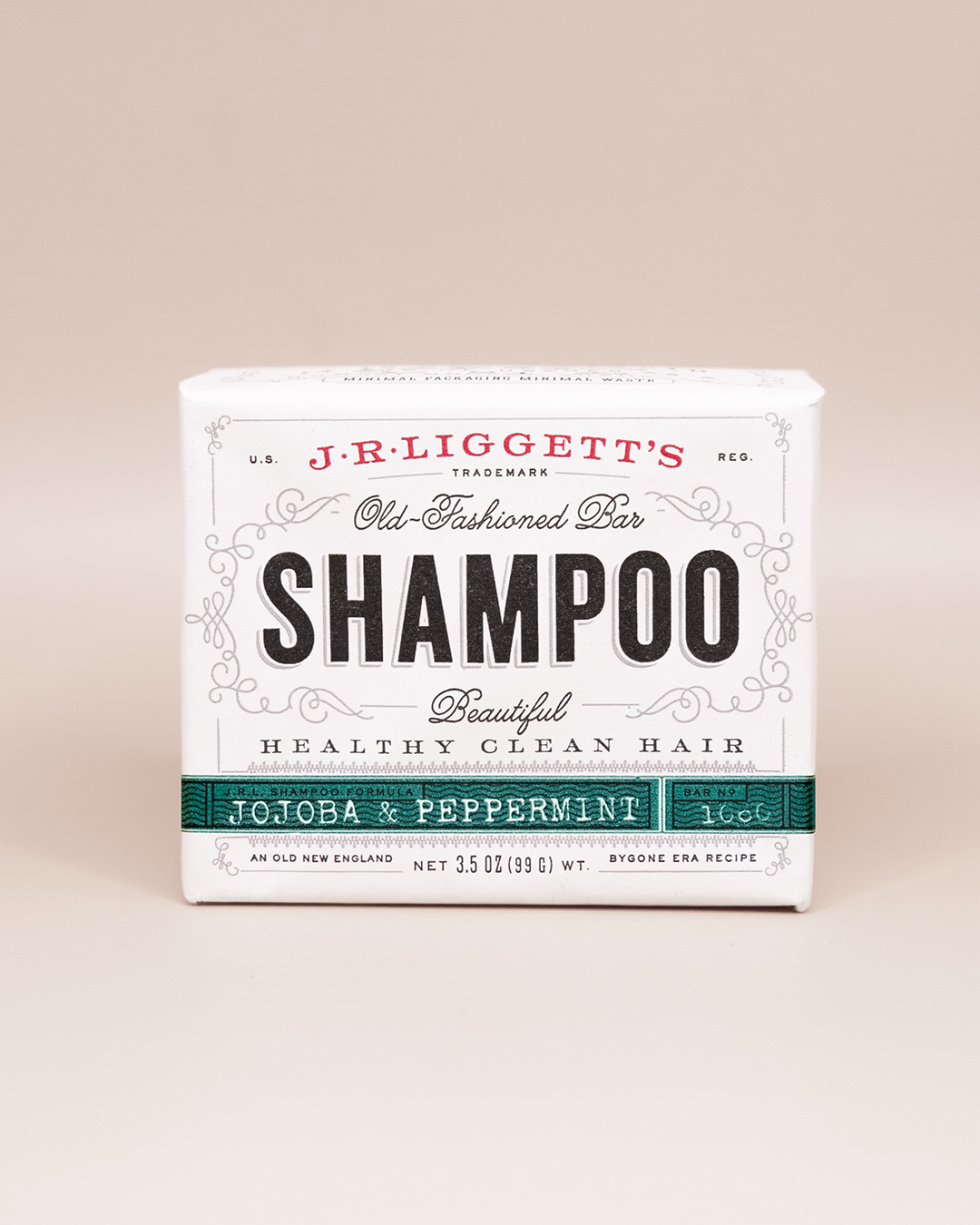


We’ve been making shampoo bars with nothing but plant-based ingredients since 1982. We have a perspective. But we also believe that informed customers make the best customers—so here’s the science, as clearly as we can lay it out.
Start With the Scalp: A Quick Primer
Your scalp is skin—living, breathing, oil-producing skin—and it’s the environment your hair follicles live in. A healthy follicle sits in a well-moisturized, lightly oiled scalp. That’s the condition under which hair grows strong, stays rooted, and sheds at a normal rate.
Your scalp produces sebum—a natural oil—to protect itself and the hair shaft. It also keeps the outer cuticle of each hair strand lying flat. Disrupt this system repeatedly, and you create conditions that can lead to irritation, dryness, excess oil production, breakage, and a compromised environment for healthy hair growth.
This is the environment that your shampoo interacts with every time you wash. The ingredient that does the cleansing matters more than most people realize.
How Synthetic Detergents Work
The majority of conventional shampoos are built around synthetic surfactants—most commonly Sodium Lauryl Sulfate (SLS) or its slightly milder cousin, Sodium Laureth Sulfate (SLES). These are petroleum-derived compounds engineered for one purpose: to break down oil and create foam.
They do that job extremely well. The problem is that they don’t distinguish between the buildup and residue you want removed and the sebum your scalp needs to stay healthy. SLS strips both with equal efficiency. The result is a scalp that’s been cleaned past the point of balance.
For some people, the consequences show up quickly:
- The scalp overproduces oil to compensate for what was stripped, creating a wash-more-often cycle
- The hair cuticle—lifted aggressively during cleansing—becomes rough and dull, requiring conditioner to smooth it back down
- Scalp irritation can encourage the growth of bacteria and fungi associated with dandruff and flaking
- For those with sensitive skin, SLS is a known irritant—and regular exposure can erode the skin barrier over time
This isn’t a fringe concern. SLS is one of the most studied cosmetic ingredients in dermatological literature precisely because of how commonly it causes reactions—even in people who don’t identify as having “sensitive” skin.
How Plant-Based Cleansing Works Differently
J.R.LIGGETT’S shampoo bars are built on saponified vegetable oils—olive, coconut, and castor oil that have been processed through saponification, the same basic chemistry used to make soap for thousands of years. The cleansing mechanism is fundamentally different from synthetic surfactants.
Saponified oils cleanse by binding to dirt and excess sebum and rinsing them away—but they do so without the aggressive stripping action of petroleum-based detergents. The scalp’s natural oil layer is reduced to a healthy level rather than eliminated entirely. The hair cuticle is cleaned without being roughed up.
The practical outcomes that long-term users consistently report:
- Hair that needs washing less frequently, as oil production normalizes over several weeks
- Scalp comfort improves, particularly for those who previously experienced itchiness or dryness
- Reduced or eliminated need for conditioner, because the cuticle is never aggressively lifted in the first place
- Hair that looks and feels healthier over time rather than dependent on product to appear that way
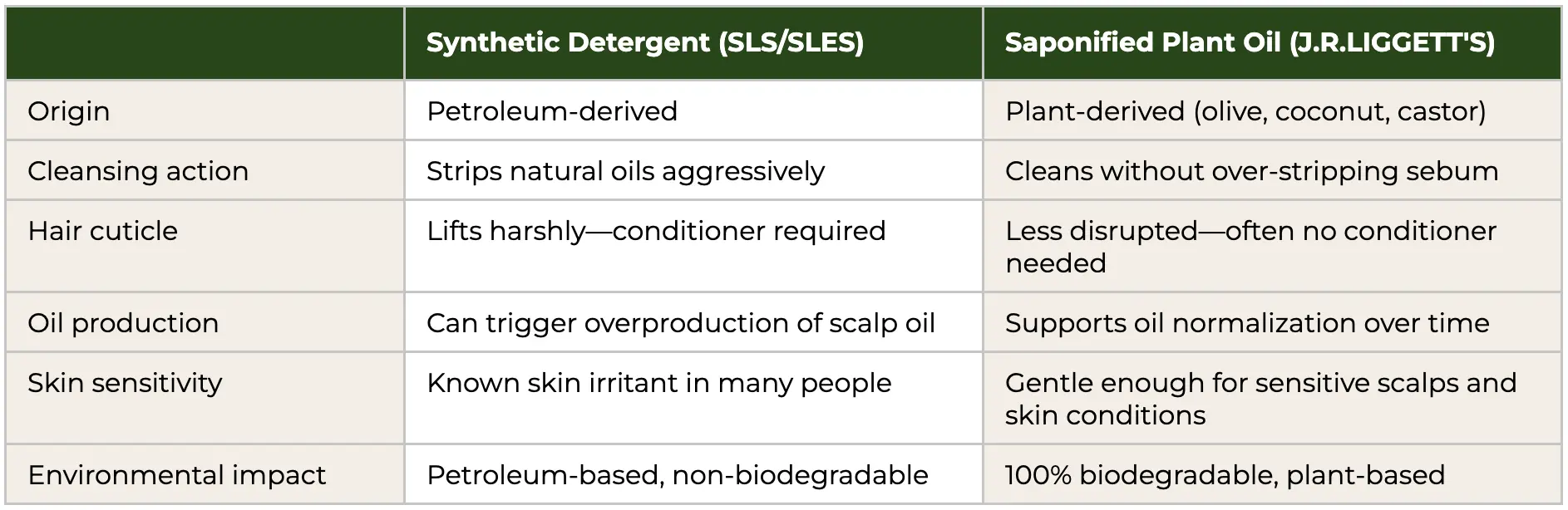
Side by Side: The Key Differences
Here’s a straightforward comparison of how the two approaches differ at the ingredient level:
What About 201CNo-Poo201D and Other Trends?
In recent years, the ‘no-poo’ movement—skipping shampoo entirely or washing only with water—gained a following among people frustrated with the strip-and-compensate cycle of synthetic shampoos. The logic is understandable: if your shampoo is causing the problem, stop using it.
The challenge is that most scalps do need some level of cleansing—especially in environments with pollution, hard water, or regular product use. Water alone doesn’t dissolve sebum effectively, and buildup over time can clog follicles and create its own problems.
A plant-based shampoo bar is, in a sense, the middle ground the no-poo movement was reaching for: a cleanser that works without the harshness that made people want to quit shampooing in the first place. You get the clean without the consequences.
A Note on 201CSulphate-Free201D Liquid Shampoos
The rise of sulfate-free liquid shampoos is a response to the same concerns. If SLS is the problem, remove it—a reasonable approach. What’s worth noting is that many sulfate-free liquids replace SLS with alternative synthetic surfactants that are milder but still synthetic, and still require preservatives, emulsifiers, and water to stay stable in liquid form.
A shampoo bar made with saponified oils requires none of those additions. The bar itself is stable, concentrated, and free from the preservatives that liquid formulas need to prevent bacterial growth. Fewer ingredients. Less processing. Less packaging. The same result—or better.
What We’ve Learned in 43 Years
When J.R. Liggett started making shampoo bars from a rediscovered 19th-century recipe, the personal care industry was moving firmly in the opposite direction. Synthetic detergents were considered modern. More ingredients meant more technology. More technology meant better.
What four decades of loyal customers have demonstrated is that the opposite is often true. Simple ingredients that work with your scalp’s biology rather than against it don’t need to be reinvented every few years. They don’t need a new delivery system or a clinical-sounding additive to justify their price. They just need to be made well, consistently, with the same commitment every time.
That’s what we’ve been doing since 1982. And we don’t plan to change the formula.