

Ingredient Breakdown: What’s Actually in Natural Shampoo Bars and Why It Matters for Hair Growth
A natural shampoo bar works differently. Without water as a base, every ingredient does something. And the goal isn’t just cleansing — it’s supporting the conditions under which healthy hair grows: a well-nourished scalp, strong follicles, reduced breakage. That’s what makes the ingredient list worth understanding.
This post is a transparent breakdown of the ingredients in J.R.LIGGETT’S® shampoo bars that are directly relevant to hair growth. We’ll cover what they are, where they come from, and what the research says about how they work.
The Foundation: Why the Base Oils Matter First
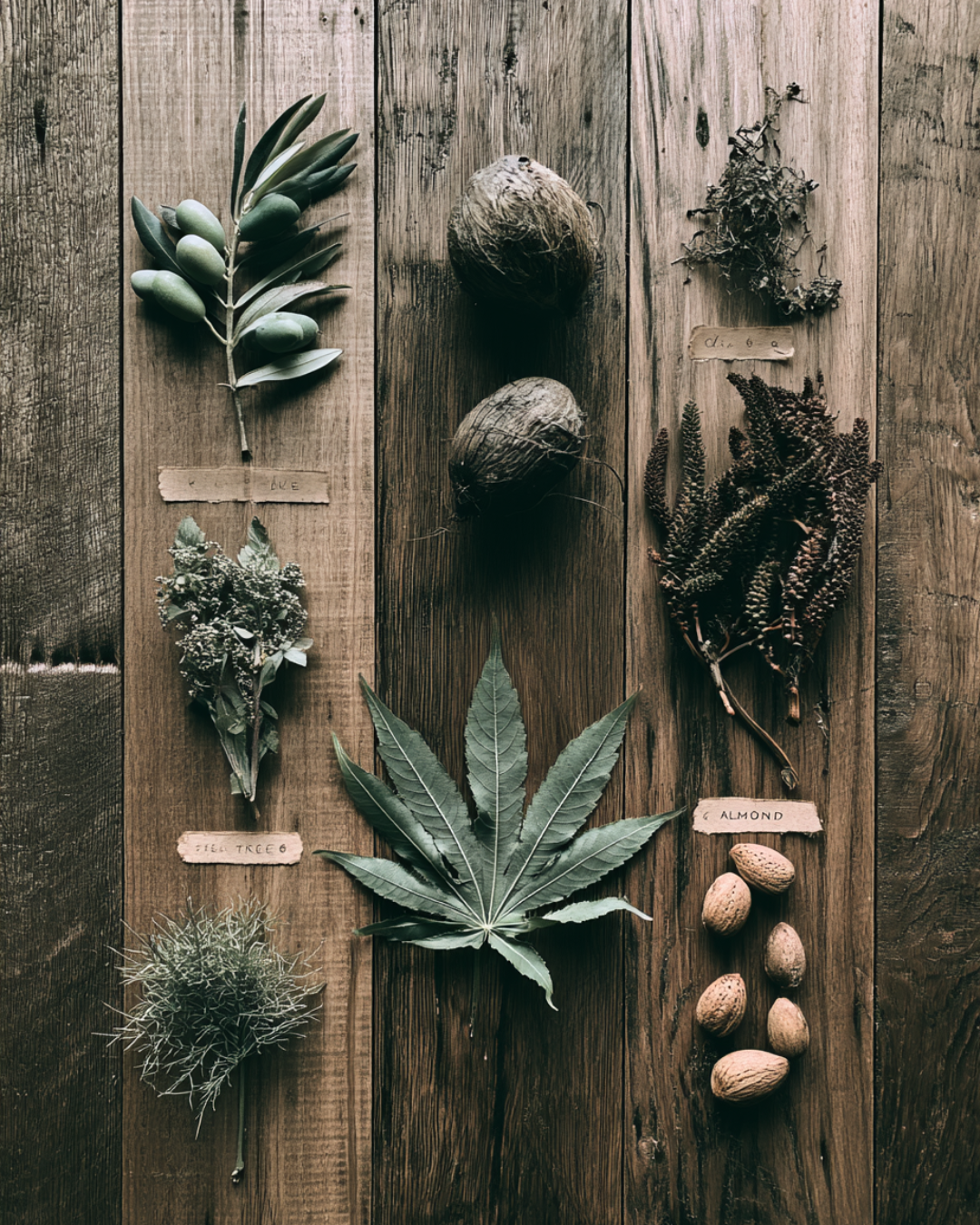
We build every J.R.LIGGETT’S shampoo bar on saponified olive, coconut, and castor oil. Saponification is the chemical process that converts oils and fats into soap. People have used it for thousands of years, and it requires no synthetic additives. The result is a cleanser whose active ingredient is a plant-derived compound, not a petroleum derivative.
This base matters for hair growth before the targeted ingredients even come into play. Cleansing without over-stripping the scalp’s natural sebum maintains the healthy follicle environment that hair growth depends on. The base oils are the reason most J.R.LIGGETT’S users don’t need conditioner. The cleansing process doesn’t aggressively lift the cuticle in the first place.
Castor Oil: The Growth-Support Workhorse
Castor oil is the most directly targeted ingredient in the J.R.LIGGETT’S base formula for hair growth. It’s present in every bar in the line.
The active compound is ricinoleic acid, a fatty acid that makes up roughly 90% of castor oil’s composition. Almost no other natural source contains it. Ricinoleic acid has documented anti-inflammatory properties and promotes scalp circulation. Both effects support the environment healthy follicles need to function.
At the follicle level, castor oil’s role is practical. It nourishes the root and calms inflammation that can interfere with the growth cycle. Over consistent use, it also contributes to thicker, more voluminous hair strands. For hair that has become thin or weak, castor oil is one of the more meaningful contributors in the base formula. Over time, it supports visible improvement.
Rosemary Essential Oil: Circulation and Follicle Stimulation
Rosemary essential oil is present in the Herbal Formula bar. Its inclusion is one of the more research-supported ingredient choices in the line, specifically for hair growth.
Rosemary oil works by stimulating blood circulation to the scalp. Improved circulation means better delivery of oxygen and nutrients to the follicle. That’s the mechanism through which rosemary oil supports the active growth phase of the hair cycle. Several studies have investigated rosemary oil’s effect on hair density. The results consistently support its role in promoting growth and strengthening existing strands.
For those dealing with thinning hair or a sluggish, underperforming scalp, the Herbal Formula’s rosemary content makes it a particularly relevant choice. It’s also suitable for all hair types generally.
Peppermint Essential Oil: Scalp Stimulation with a Measurable Effect
Peppermint essential oil is the primary targeted ingredient in the Jojoba & Peppermint bar. Its role in hair growth support is twofold.
First, menthol — peppermint’s active compound — produces a cooling sensation on the scalp. That sensation reflects genuine vasodilation: the blood vessels near the skin’s surface dilate, increasing local circulation. This is the same mechanism rosemary oil works through, and the two ingredients complement each other when paired together.
Second, clinical studies have shown that peppermint oil supports hair growth. It prolongs the anagen (active growth) phase of the hair cycle and increases follicle depth. These aren’t cosmetic effects. They reflect structural changes at the follicle level that support longer, denser hair over time.
For people dealing with thinning at the scalp or slower-than-expected growth, the Jojoba & Peppermint bar is a particularly intentional choice. Its targeted formulation makes it stand out in the line.
Jojoba Oil: Sebum Balance and Follicle Health
Jojoba oil is present in the Jojoba & Peppermint bar. It contributes to hair growth support through a different mechanism than the circulation-focused oils above.
Jojoba oil is chemically similar to human sebum — the natural oil the scalp produces to protect itself and the hair shaft. This similarity allows jojoba to dissolve sebum buildup around the follicle opening without over-stripping. It also signals to the scalp that oil levels are balanced, which can reduce overproduction over time.
A clean, unobstructed follicle is a functional follicle. Sebum buildup and clogged follicle openings are common, underappreciated contributors to slower hair growth and increased shedding. Jojoba’s role in keeping the follicle environment clear is quiet but meaningful. It matters most for fine or oily hair types, where buildup accumulates fastest.
Hemp Oil: Omega Fatty Acids and Follicle Strength
Hemp oil is a key ingredient in the Tea Tree & Hemp Oil bar. Its contribution to hair growth support comes from its exceptionally balanced omega fatty acid profile — specifically omega-3, omega-6, and omega-9. That ratio closely matches what the scalp needs for optimal function.
Omega fatty acids are essential for maintaining the integrity of the scalp’s skin barrier. A healthy barrier retains moisture and resists inflammation. It also provides the stable environment follicles need to complete their full growth cycle without interruption. Hemp oil strengthens hair follicles directly and reduces inflammation at the scalp level. It also supports the kind of sustained follicle activity that produces longer, stronger hair over time.
For scalps dealing with dryness, irritation, or the chronic low-grade inflammation that can shorten the growth cycle, hemp oil is particularly relevant. Its combination of nourishment and anti-inflammatory properties addresses all three.
Vitamin E: Environmental Protection for the Follicle
Vitamin E is present in multiple J.R.LIGGETT’S formulas, including the Herbal, Moisturizing, Original, and Jojoba & Peppermint bars. Its role in hair growth support is protective rather than stimulating.
As an antioxidant, vitamin E neutralizes the free radical damage that UV exposure, pollution, and oxidative stress cause. At the scalp level, this protection matters. Researchers associate oxidative stress with follicle damage and with premature entry into the resting phase of the hair cycle.
Vitamin E also improves blood circulation to the scalp. It supports the lipid layer that keeps scalp skin healthy and resilient. For hair exposed to environmental stressors — sun, wind, hard water, pollution — vitamin E’s presence in the formula matters. It reduces the ongoing damage load the follicle has to contend with.
What’s Not in the Bar (and Why That Also Matters)
Ingredient transparency isn’t just about what’s present. What’s absent from J.R.LIGGETT’S bars is equally relevant to the hair growth conversation.
- No SLS or synthetic surfactants — eliminates the over-stripping that disrupts sebum balance and stresses the follicle environment
- No synthetic fragrances — artificial fragrance compounds are a common source of scalp irritation and contact dermatitis, both of which can impair follicle function
- Preservative-free by design — solid bars don’t need them, and preservatives in liquid formulas can cause scalp sensitivity in some people
- No silicones — silicone buildup on the scalp can clog follicle openings and interfere with the natural oil cycle the follicle depends on
- Free from GMOs, gluten, and palm oil — a clean formulation with nothing that needs justifying
Every ingredient in a J.R.LIGGETT’S bar is there because it contributes something. Nothing is there to extend shelf life, reduce production cost, or simulate a sensory effect. That’s not a marketing position. It’s a consequence of how we’ve always made the bars.