


Why We’ve Never Changed the Formula: The Case for Consistency in Hair Care
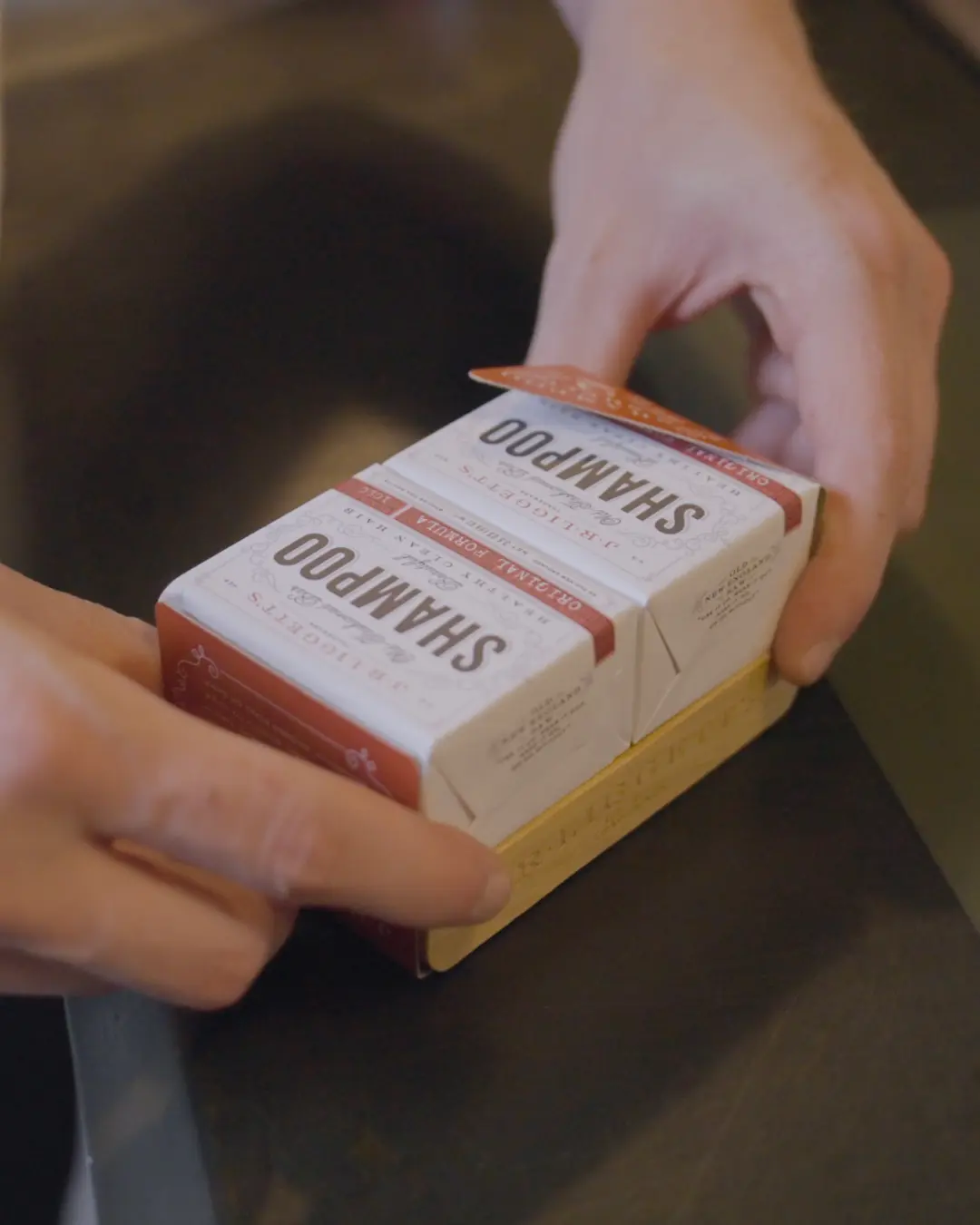
How the Formula Started
In the 1980s, J.R. Liggett was working as a Clio Award-winning art director at Ogilvy & Mather in New York City. On a visit to the family’s historic 1769 farm in Cornish, New Hampshire, he found a handwritten recipe card tucked inside a 19th-century cookbook. The card was titled simply: “Hair Soap.”
He made a batch. Family and friends tried it and kept coming back for more. The formula worked. It worked without synthetic detergents, without plastic packaging, without preservatives. It worked because saponified vegetable oils — olive, coconut, castor — are genuinely effective cleansers that treat the scalp and hair without stripping them.
That formula became the Original Formula bar. It has not changed since.
Why Most Brands Reformulate
Reformulation is rarely announced as cost-cutting. It usually comes packaged as innovation. A new active ingredient. A better delivery system. An updated fragrance profile. The language is always forward-looking.
The actual drivers are often different. Raw material costs fluctuate. A key ingredient becomes harder to source. A parent company pushes for margin improvement. A trend creates pressure to add something new — a buzzword ingredient, a new format, a clinical-sounding additive — to stay relevant on shelf.
For publicly traded companies or brands owned by large conglomerates, this pressure is structural. The formula is a financial variable as much as it is a product decision. Stability in the formula is harder to maintain when stability isn’t the primary goal.
Why J.R.LIGGETT’S Hasn’t
J.R.LIGGETT’S is family-owned. It has always been family-owned. The people making decisions about the formula are the same people whose name is on the label. There is no shareholder pressure to reformulate for margin. There is no parent company pushing for ingredient substitution. There is no external mandate to launch something new.
More importantly: the formula works. Four decades of customers returning for the same bar is not a passive result. It is an active endorsement of a formula that does what it says, consistently, every time. When something works that well, the case for changing it doesn’t exist.
Stability in a formula is also a form of respect for the customer. When you buy the same bar this year that you bought five years ago, you know what you’re getting. The ingredient list hasn’t been quietly adjusted. The scent hasn’t drifted. The performance hasn’t changed because a raw material got swapped for a cheaper alternative.
What “Never Reformulated” Actually Means
It means the saponified olive, coconut, and castor oil base is the same base used in 1982. It means the essential oil blend — rose, lavender, spearmint — is the same blend that first made family and friends ask for more. It means no ingredient has been added to chase a trend, and none has been removed to cut costs.
It also means something about what’s not in the bar. No SLS. No synthetic fragrances. No preservatives. No plastic packaging. These weren’t removed in a reformulation to make the bar cleaner. They were never there. The formula was built without them from the beginning, because the founder understood that simple ingredients made well outperform complicated ones.
Consistency as Quality Control
Every J.R.LIGGETT’S bar is made by hand in small batches in a renovated cow barn on the family farm in Cornish, New Hampshire. The facility runs on 95% solar energy. The people making the bars work in the same space, with the same process, every time.
Small-batch production creates a different kind of quality control than large-scale manufacturing. The ingredient quality is visible at every step. A substandard batch of oil doesn’t get absorbed into a large run — it gets caught. The consistency of the process reflects the consistency of the formula: both are held to a standard that the people making the product can see and assess directly.
This is what 43 years without reformulation looks like in practice. Not a marketing claim. A production reality.
The Original Formula Today
The Original Formula bar is what it has always been: saponified olive, coconut, and castor oils with rose, lavender, and spearmint essential oils. It lathers quickly, cleans well, and rinses out easily. It doesn’t strip the natural oils from your hair. Most people who use it don’t need a conditioner.
It smells clean. Not like a fragrance. Clean.
That’s the formula. It hasn’t changed. It doesn’t need to.