

Olive Oil for Hair: Ancient Beauty Secret, Modern Science

What Olive Oil Actually Contains
The performance of olive oil in hair care comes down to its composition. It’s predominantly oleic acid — a monounsaturated fatty acid making up roughly 70–80% of its profile — along with smaller amounts of linoleic acid, palmitic acid, vitamin E, squalene, and polyphenols.
These aren’t incidental. Each plays a specific role in how olive oil interacts with hair.
- Oleic acid — small molecular structure that penetrates the hair shaft rather than sitting on the surface; the mechanism behind olive oil’s moisturizing depth
- Vitamin E (tocopherol) — a natural antioxidant that protects hair and scalp from oxidative stress caused by UV exposure, pollution, and environmental damage
- Squalene — a natural emollient that closely resembles compounds found in human sebum, supporting compatibility with the scalp’s natural oil layer
- Polyphenols — plant-derived antioxidants with anti-inflammatory properties that support a calm, healthy scalp environment
How Olive Oil Works on Hair Structure
Each hair strand has an outer layer — the cuticle — made up of overlapping scales that lie flat when hair is healthy. Below that is the cortex, where the hair’s protein and moisture live.
Most conditioning ingredients stay at the cuticle. They coat the outside of the strand and create the appearance of health. Olive oil works differently. Its oleic acid content and small molecular structure let it penetrate past the cuticle into the cortex. It preserves moisture where moisture actually lives. It strengthens hair from within rather than patching the surface.
Moisture Retention
Olive oil reduces moisture loss from the hair shaft. Hair that holds onto moisture behaves differently — more flexible, less prone to breakage, more manageable between washes. Dry, damaged, or color-treated hair benefits most, since a compromised cuticle loses moisture faster.
Cuticle Smoothing and Shine
When the cuticle lies flat, light reflects evenly off the hair surface. That produces natural shine. Olive oil supports this by reducing the internal tension that causes the cuticle to lift. The shine comes from the hair’s own structure — not from a coating on top. It improves with consistent use rather than fading between washes.
Color Longevity
For color-treated hair, the cuticle is the gatekeeper. A flat, sealed cuticle keeps color molecules in the cortex where they belong. A rough or lifted cuticle lets them escape — color fades faster. Olive oil’s ability to smooth the cuticle from within helps extend color life. Customers who switch from sulfate-based shampoos consistently report this.
Scalp Health and Anti-Inflammatory Support
Olive oil’s polyphenols and vitamin E support scalp health in two ways. As antioxidants, they reduce oxidative damage from environmental stressors. As anti-inflammatory compounds, they calm itchiness, redness, and sensitivity. Both support the healthy follicle environment that strong hair growth depends on.
The anti-inflammatory properties of olive oil’s constituent compounds are well-established in research. We don’t make medical treatment claims — but the science behind these properties is not in dispute.
Why Saponified Olive Oil Performs the Same Way
The olive oil in a J.R.LIGGETT’S bar goes through saponification — the process that converts it into a cleanser. Saponification changes the form of the oil, not its functional properties. The resulting compound retains the fatty acid profile and key beneficial compounds of the original oil. It also becomes water-soluble, which allows it to rinse clean — something raw olive oil applied to hair cannot do.
The cleanser itself is nourishing, not stripping. The thing doing the cleaning is also the thing doing the conditioning.
Where You’ll Find It in Our Line
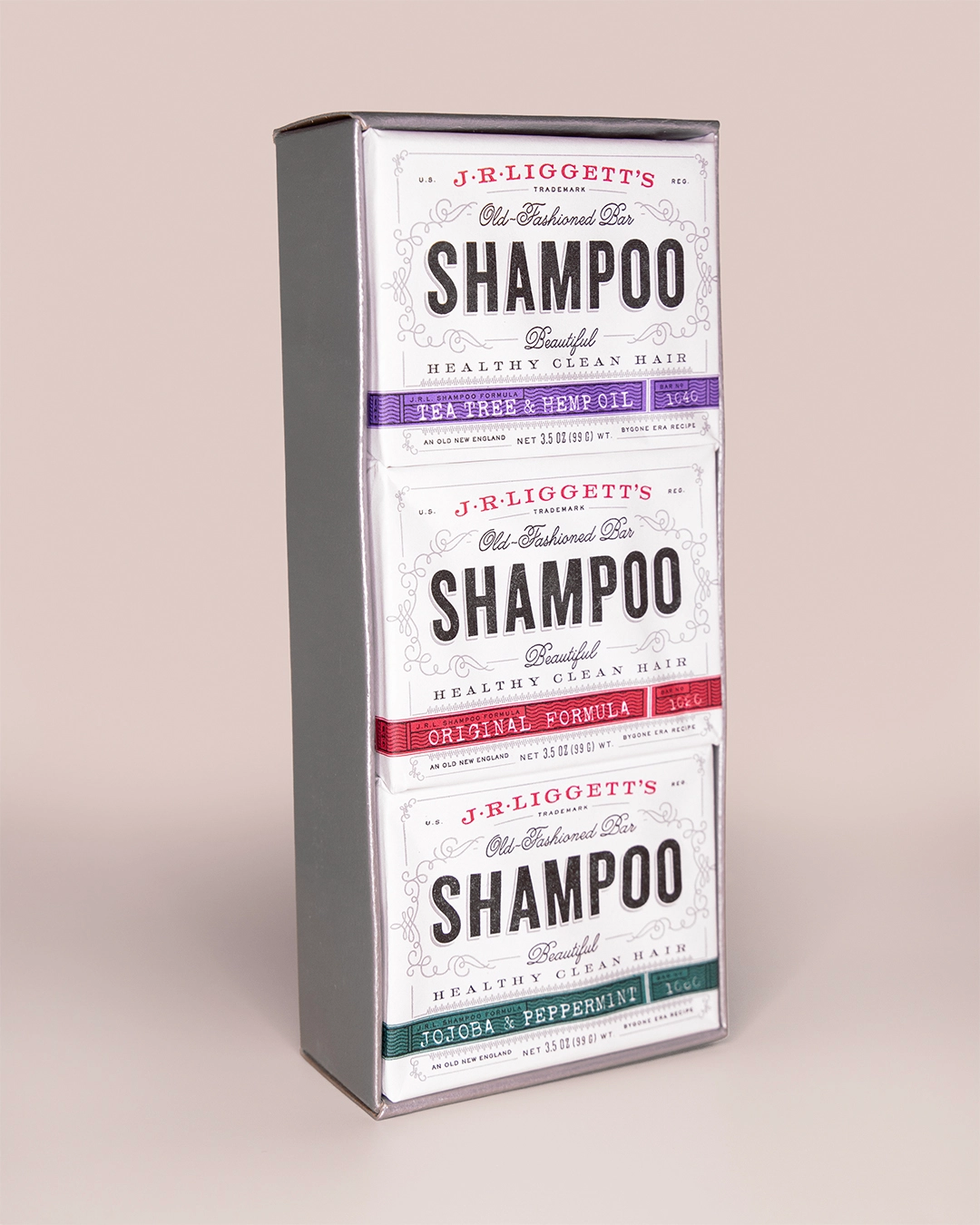
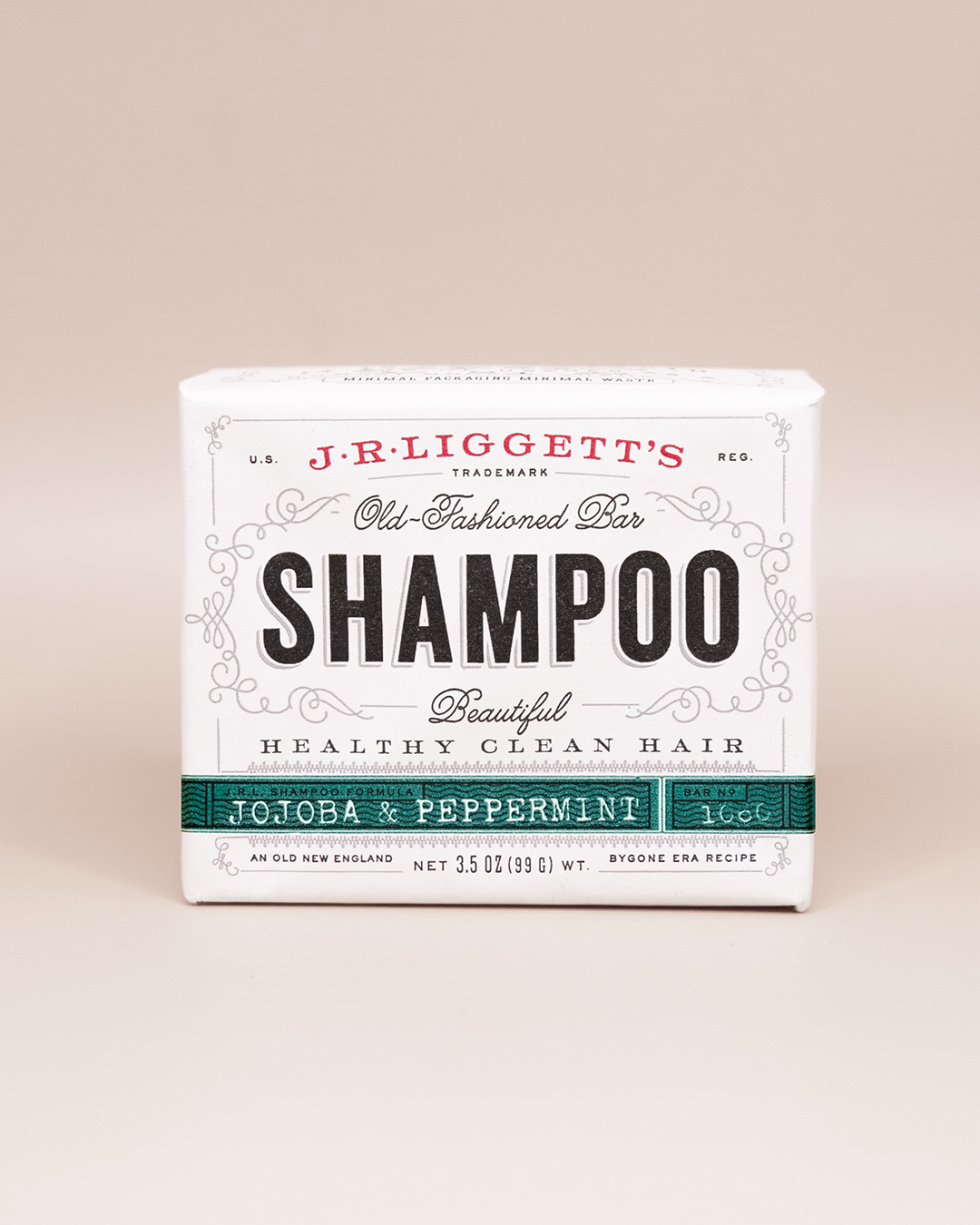
Olive oil leads every J.R.LIGGETT’S formula. Two bars highlight its benefits most directly.
Original Formula — saponified olive, coconut, and castor oils with rose, lavender, and spearmint essential oils. For normal to oily hair, it’s the bar that proves simple ingredients made well don’t need improving.
Herbal Formula — the same olive oil base paired with rosemary, lavender, and cedarwood essential oils, plus vitamin E. Rosemary amplifies circulation support. Cedarwood balances scalp oil production. Lavender calms irritation. For anyone whose scalp needs extra attention alongside the nourishment olive oil provides.