


Family Values, Family Business: How Small-Scale Production Benefits Your Hair and the Planet
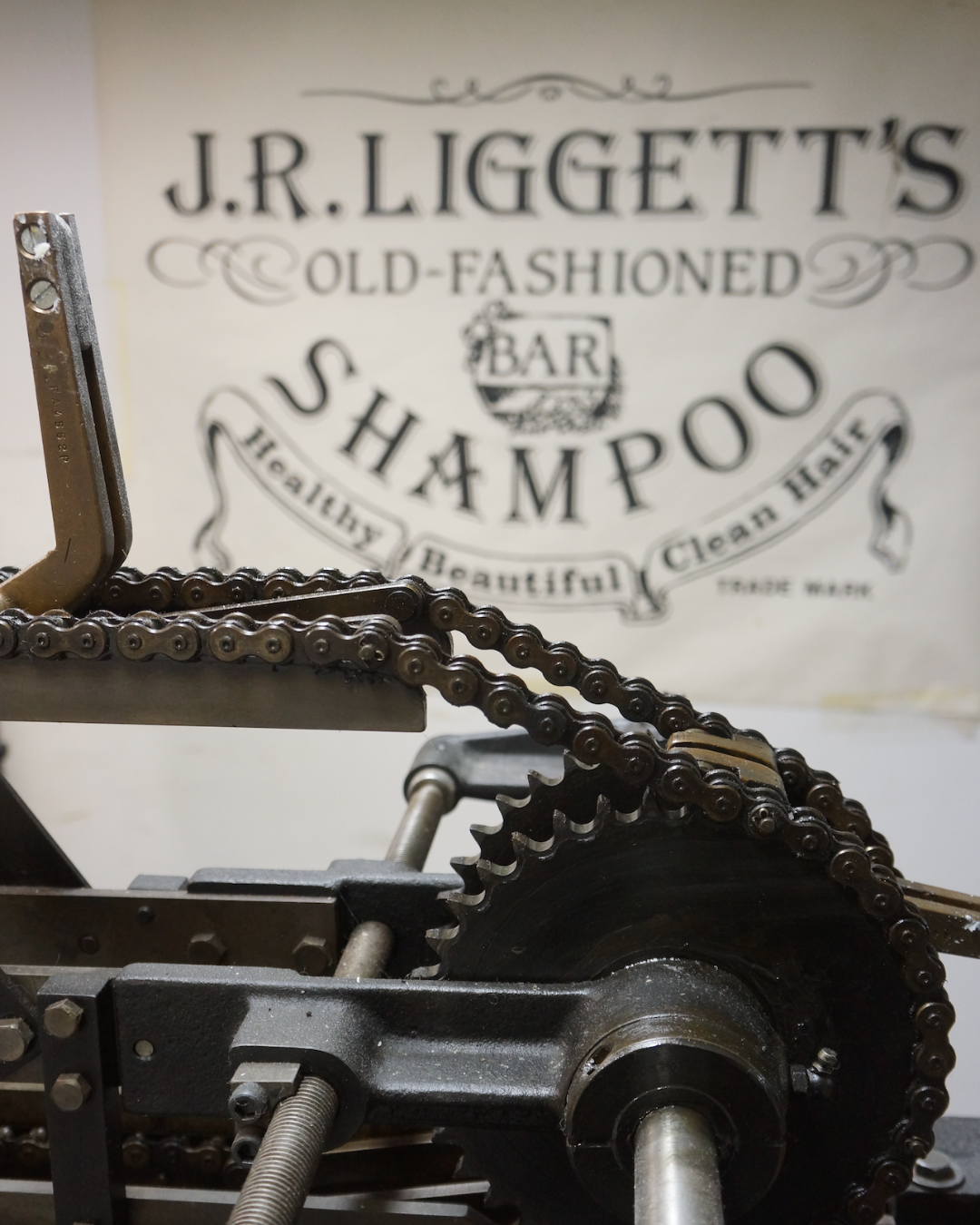
This post is about what that actually means — for quality, for ingredients, for the people making the product, and for the land it’s made on.
Where It Started
J.R. Liggett’s first encounter with soap making happened at age five, helping his Great Aunt Ann render fats and oils in Denman, Nebraska for her annual batch of all-purpose homemade soap. That early experience — practical, utilitarian, rooted in the idea that you could make something essential yourself from simple ingredients — left a lasting impression.
Decades later, working as a Clio Award-winning art director at Ogilvy & Mather in New York City, J.R. discovered a handwritten recipe card tucked inside a 19th-century cookbook on the family’s historic 1769 farm in Cornish, New Hampshire. The card was titled simply: “Hair Soap.”
He made a batch. The results were remarkable enough that family and friends kept coming back for more.
From Nebraska to New Hampshire
With his wife and co-founder Diane, J.R. made the decision to turn that recipe into a business — and to do it from the farm, by hand, the way the recipe had always intended.
At a time when every other shampoo on the market came in a plastic bottle and was built around synthetic detergents, that decision was, at minimum, unusual. It turned out to be foundational.
The Barn, the Farm, and the Solar Array
J.R.LIGGETT’S bars are made in a renovated cow barn on the family farm in Cornish, New Hampshire. The facility runs on 95% solar energy. The farm itself runs on the same.
This isn’t incidental. When a production facility is physically located on land a family has owned and lived on, the relationship between what you make and where you make it is direct in a way that a contract manufacturer in a distant facility simply cannot replicate. The people making the bars are connected to the outcome. The founder’s name is on the label. The land the operation runs on belongs to the same family.
That proximity creates accountability at every step — not because a policy mandates it, but because the consequences of cutting corners are immediately visible.
What Small-Batch Shampoo Bar Production Actually Controls
Large-scale personal care manufacturing optimizes for consistency at volume. That’s a legitimate engineering goal, and it produces reliable results — but it requires certain trade-offs. Preservatives to extend shelf life across long supply chains. Emulsifiers to keep liquid formulas stable. Water as a primary ingredient to reduce production costs and make formulas easier to work with at scale.
Small-batch production has different constraints and different advantages. At J.R.LIGGETT’S, those advantages show up in a few specific ways:
Ingredient quality is visible
When you’re making bars by hand in small batches, the quality of every ingredient is immediately apparent. There’s nowhere for a substandard oil or a compromised batch of botanicals to hide. The person making the bar is also the person who would notice — and care — if something was off.
No synthetic preservatives
J.R.LIGGETT’S bars finish as a solid, which means they deliver more in a smaller footprint than liquid formulas that rely on water as a primary ingredient. Because the formula uses natural ingredients, it doesn’t need synthetic preservatives to stay stable. Rosemary essential oil, present in several formulas, also acts as a natural preservative — doing double duty as both a scalp-supporting botanical and a protector of the formula’s integrity. Fewer synthetic inputs. Nothing in the bar that isn’t earning its place.
No plastic, by design
We wrap the bars in paper. Always have. This wasn’t a pivot toward sustainability when plastic-free packaging became marketable — it’s simply what the product has always been. A solid bar doesn’t require a plastic container to stay stable, so there was never a reason to use one.
The formula hasn’t changed
Forty-three years of loyal customers is, among other things, a quality control record. When a formula works and the people making it have no incentive to change it — no reformulation pressure from shareholders, no cost-cutting mandate from a parent company — it stays the same. The Original Formula bar that customers buy today is the same bar that started the company.
Ethical Sourcing as a Practical Matter
For a small family business making bars by hand, ingredient sourcing is a direct relationship rather than a procurement exercise. The oils and botanicals that go into J.R.LIGGETT’S bars — olive, coconut, castor, jojoba, argan, hemp, essential oils — we select for quality and consistency, not to minimize cost.
This is one of the practical advantages of staying small: the same people who put their name on the product decide what goes into it. There’s no layer of corporate ingredient substitution between the founder’s intent and the finished bar.
Why Any of This Matters to You
Most people don’t think about who made their shampoo or where. It’s a reasonable default — there are more important things to think about, and most personal care products are interchangeable enough that the question doesn’t feel pressing.
But a product’s origin is also a proxy for what’s in it and why. A family business making bars by hand on a solar-powered farm in New Hampshire, using the same formula for 43 years, has a different relationship to its ingredients than a multinational brand reformulating annually to hit margin targets.
What ends up in the bar — and what doesn’t — reflects that difference directly.
No SLS, no synthetic fragrances, no preservatives, no plastic — not because a reformulation removed them, but because they were never there to begin with, the same way they’ve never been there in forty-three years of small-batch shampoo bars.