

The True Environmental Cost of Bottled Shampoo vs. Shampoo Bars
The Plastic Problem: Numbers That Can’t Be Ignored
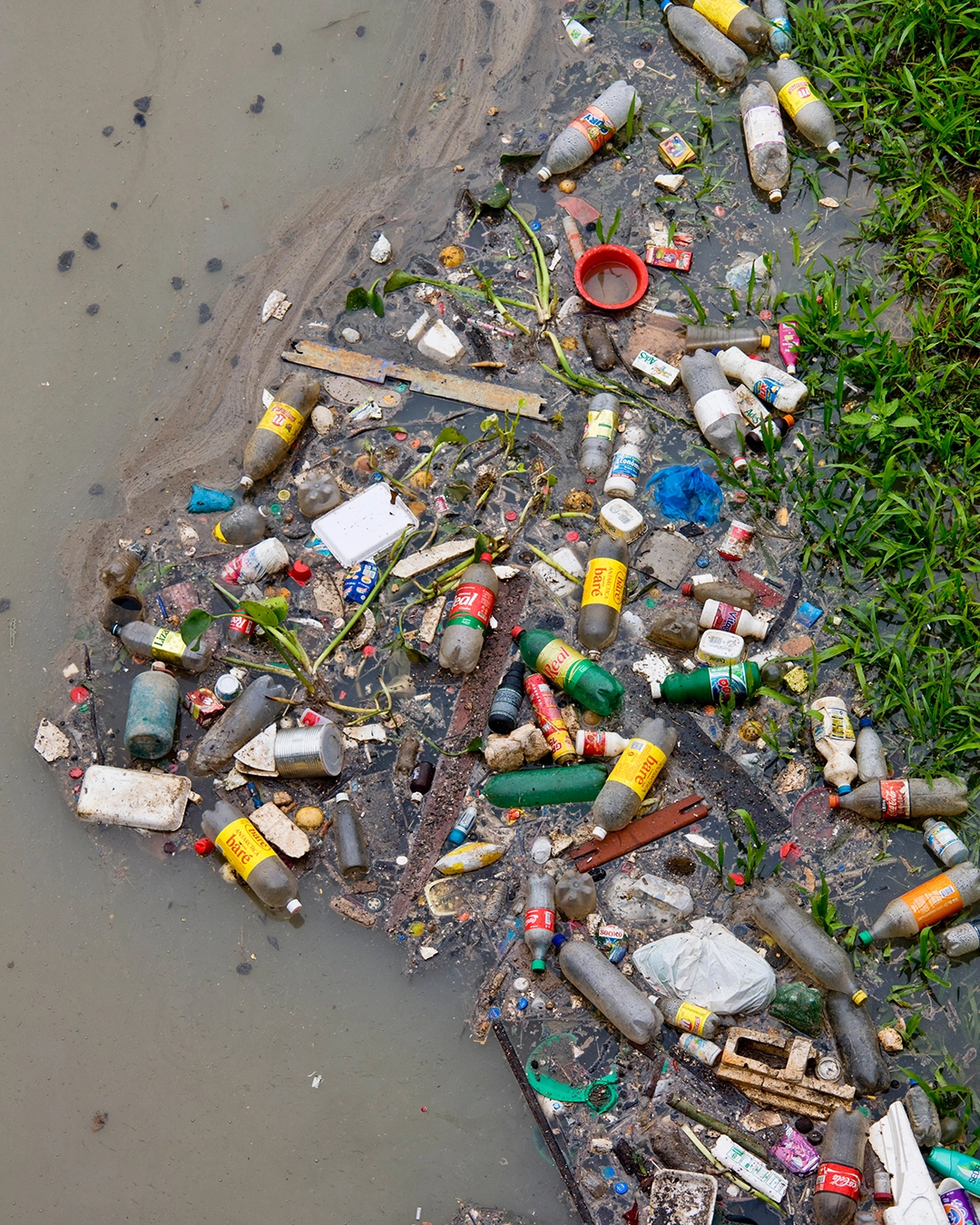
552 million shampoo bottles end up in U.S. landfills every year. Most will take 450 years to decompose—if they decompose at all.
Here’s what makes this particularly troubling: the average American household goes through approximately 11 bottles of shampoo annually. Multiply that by every household in the country, and you’re looking at a staggering amount of single-use plastic entering the waste stream.
But the environmental cost doesn’t start when you toss that empty bottle. It starts long before it reaches your shower.
Water Weight: The Hidden Transportation Cost
A typical 16 oz bottle of liquid shampoo contains roughly 80% water. You’re essentially paying to ship water across the country—water you already have coming out of your tap.
Consider the journey:
Raw materials are extracted and processed
Water is added at manufacturing facilities
Heavy bottles are shipped to distribution centers
Trucks carry that water weight to retail stores
You drive it home in your car
Every ounce of that water weight translates to fuel consumption and carbon emissions.
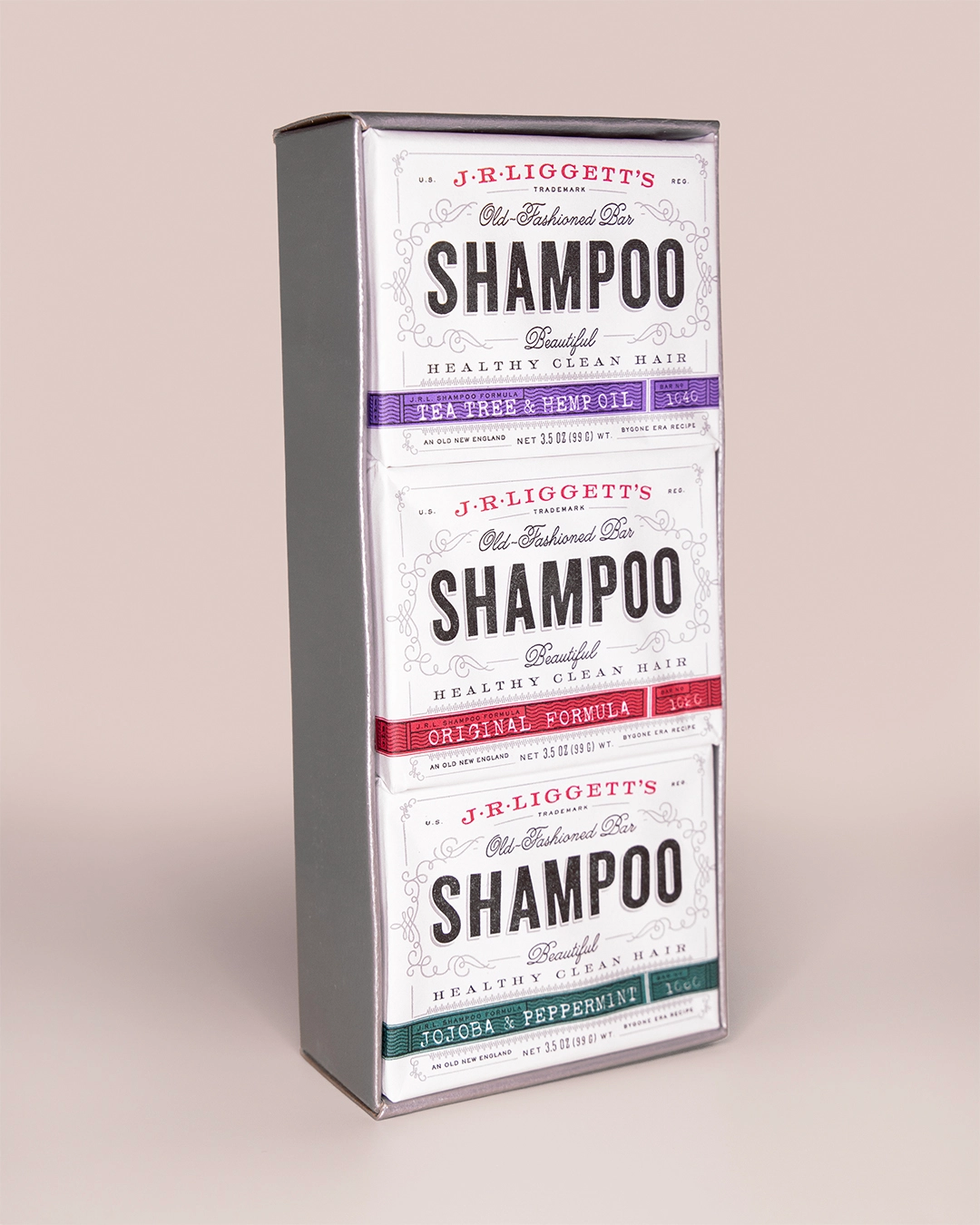
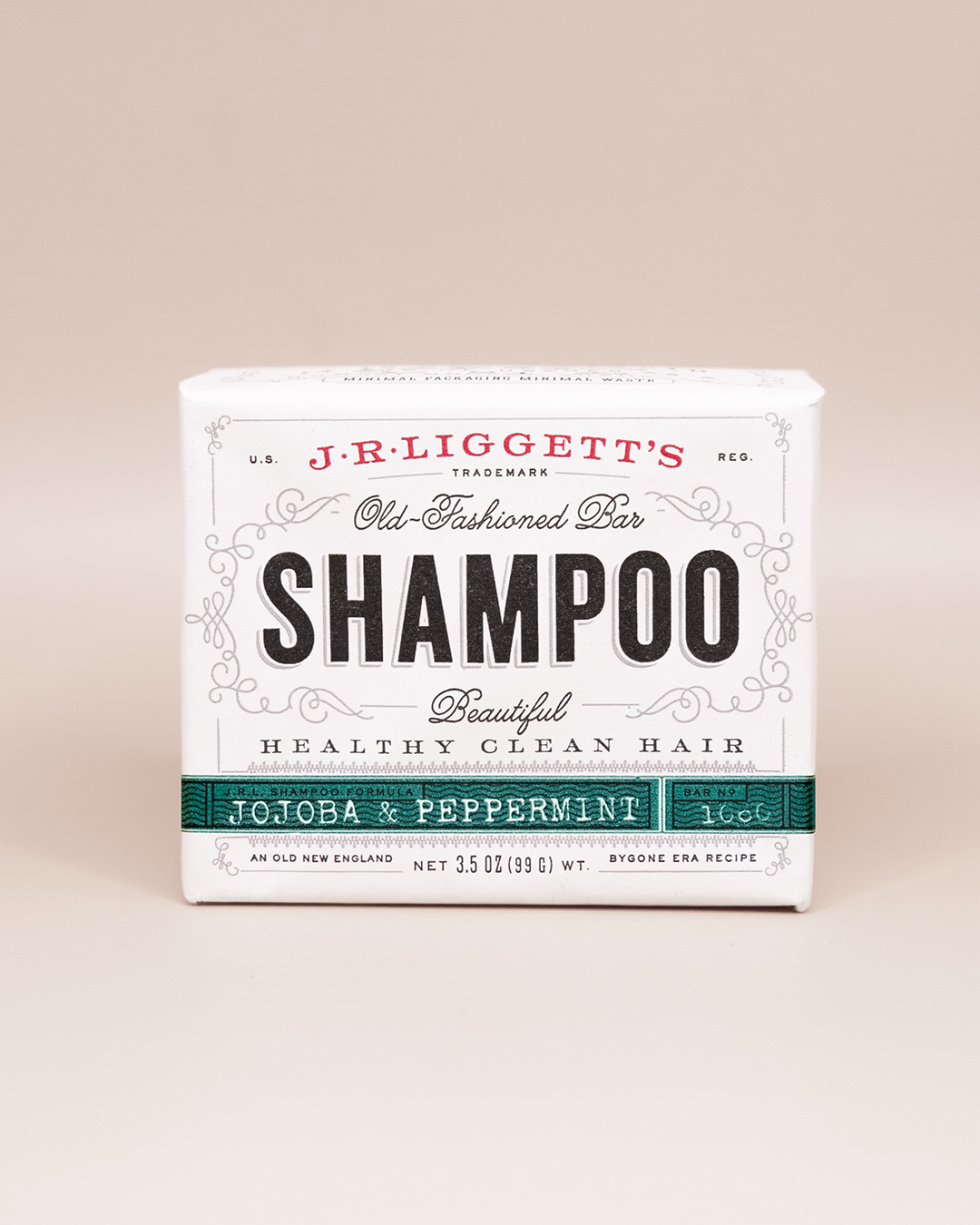
A J.R.LIGGETT’S® 3.5 oz shampoo bar, by contrast, contains zero added water. Our concentrated formula weighs a fraction of bottled shampoo while delivering the equivalent of 2-3 bottles’ worth of washes. Less weight means fewer trucks on the road, reduced fuel consumption, and a smaller carbon footprint from production to your door.
Manufacturing Footprint: Solar-Powered vs. Industrial Scale
We make our shampoo bars by hand in small batches on our New Hampshire farm, which is 95% powered by renewable solar energy. Our renovated barn workshop operates on a human scale—thoughtful, intentional, and connected to the soap-making tradition our founder first learned as a child from his Great Aunt Ann.
Compare that to industrial shampoo manufacturing:
Massive facilities running around the clock
Energy-intensive bottling lines
Plastic pellet production and molding
Chemical processing for synthetic ingredients
Extensive water treatment systems
Large-scale production isn’t inherently bad, but it does come with environmental costs that accumulate with every bottle produced.
The Packaging Paradox
Let’s talk about what happens after you’ve used that last drop of shampoo.
Plastic bottles, even when recyclable, face significant challenges:
Only about 9% of plastic ever produced has been recycled
Contamination from product residue reduces recyclability
Recycling itself requires energy and creates emissions
Most plastic can only be “downcycled” into lower-quality materials
Much ends up in landfills or, worse, our oceans
Our paper-wrapped bars tell a different story:
100% biodegradable packaging
Minimal material used
Can be composted in your backyard
Zero plastic ever enters the waste stream
It’s the choice we made in 1982, and it’s the choice that makes sense for the next generation.
Ingredient Simplicity: Fewer Inputs, Less Impact
Bottled shampoos require a complex web of ingredients to function:
Water (as we mentioned—lots of it)
Synthetic detergents like Sodium Lauryl Sulfate
Preservatives to prevent bacterial growth in that water
Emulsifiers to keep ingredients mixed
Thickening agents for that “premium” feel
Synthetic fragrances to mask chemical smells
Colorants for shelf appeal
Each additional ingredient represents its own supply chain, processing requirements, and environmental footprint.
J.R.LIGGETT’S bars are made with saponified vegetable oils, natural botanicals, and pure essential oils. That’s it. No preservatives needed (there’s no water for bacteria to grow in). No synthetic detergents. No complicated formulation required.
Simple ingredients mean:
Fewer raw materials extracted
Less processing and refinement
Reduced chemical manufacturing
Lower overall environmental burden
The Longevity Factor
Here’s something most people don’t consider: one J.R.LIGGETT’S shampoo bar lasts as long as 2-3 bottles of liquid shampoo.
That means:
Fewer purchases over time
Less frequent shipping
Reduced packaging waste per wash
Lower overall consumption
Our customers regularly tell us a single bar lasts them 2-3 months—sometimes longer. We’ve heard from minimalist travelers who’ve stretched a single bar across a six-month journey. That concentrated, long-lasting formula isn’t just convenient; it’s inherently more sustainable.
What “Detergent-Free” Really Means for the Environment
Most liquid shampoos contain petroleum-based detergents—harsh cleansing agents derived from fossil fuels. When you rinse them down the drain, they enter water treatment systems and, eventually, natural waterways.
These synthetic surfactants:
Can persist in aquatic environments
May harm fish and other aquatic life
Require significant energy to produce
Come from non-renewable petroleum sources
Our vegetable-oil-based formula breaks down naturally and completely. The saponified olive oil, coconut oil, and castor oil that form our base are biodegradable and gentle on aquatic ecosystems. What goes down your drain doesn’t carry the same environmental burden.
The Cumulative Choice
Let’s do some simple math:
If an average person uses 11 bottles of shampoo per year, over a lifetime (let’s say 70 years), that’s:
770 plastic bottles per person
Approximately 38,500 bottles for a family of five over the same period
Switch to shampoo bars, and those numbers drop dramatically:
Roughly 230-260 bars per person over 70 years
All wrapped in biodegradable paper
Zero plastic entering landfills
Multiply that by every household making the switch, and you start to see real impact.
“We’ve Been Doing This Quietly and Well for Decades”
Here’s what we’ve learned from 43 years of making the same product the same way: consistency matters more than trends.
We didn’t switch to plastic bottles when everyone else did in the 1980s. We didn’t reformulate to chase the latest beauty fad. We kept making honest, simple shampoo bars wrapped in paper—because it worked, because it was right, and because some choices don’t need to change.
That New Hampshire farm where J.R. first discovered that handwritten “Hair Soap” recipe in an old cookbook? It’s still family-owned. Still powered by solar energy. Still producing small batches by hand in the same renovated cow barn.
Some might call that old-fashioned. We call it doing what makes sense.
The Choice Is Yours
We’re not here to shame anyone for using bottled shampoo. We understand convenience, habit, and the comfort of familiar routines.
But we do think you deserve to know what’s actually at stake—what’s hidden in that innocent-looking plastic bottle in your bathroom.
The environmental cost of conventional shampoo isn’t just about the bottle you throw away. It’s about:
The resources extracted to make it
The water and energy used to produce it
The emissions generated shipping it
The chemicals released when you use it
The plastic waste that outlives us all
A shampoo bar offers a different equation: concentrated, plastic-free, made with renewable energy and simple ingredients that break down naturally.
It’s the choice we made in 1982. It’s the choice that’s been right for over four decades.
And it’s a choice available to you today.
Ready to make the switch? Explore our collection of all-natural shampoo bars, each handcrafted on our solar-powered New Hampshire farm using the same time-tested formulas families have trusted for generations.
Simple ingredients. Thoughtful craftsmanship. Consistency over time.